
AI Dermatologist: How AI Skin Analysis Works, How Accurate It Is, and When to See a Real Doctor
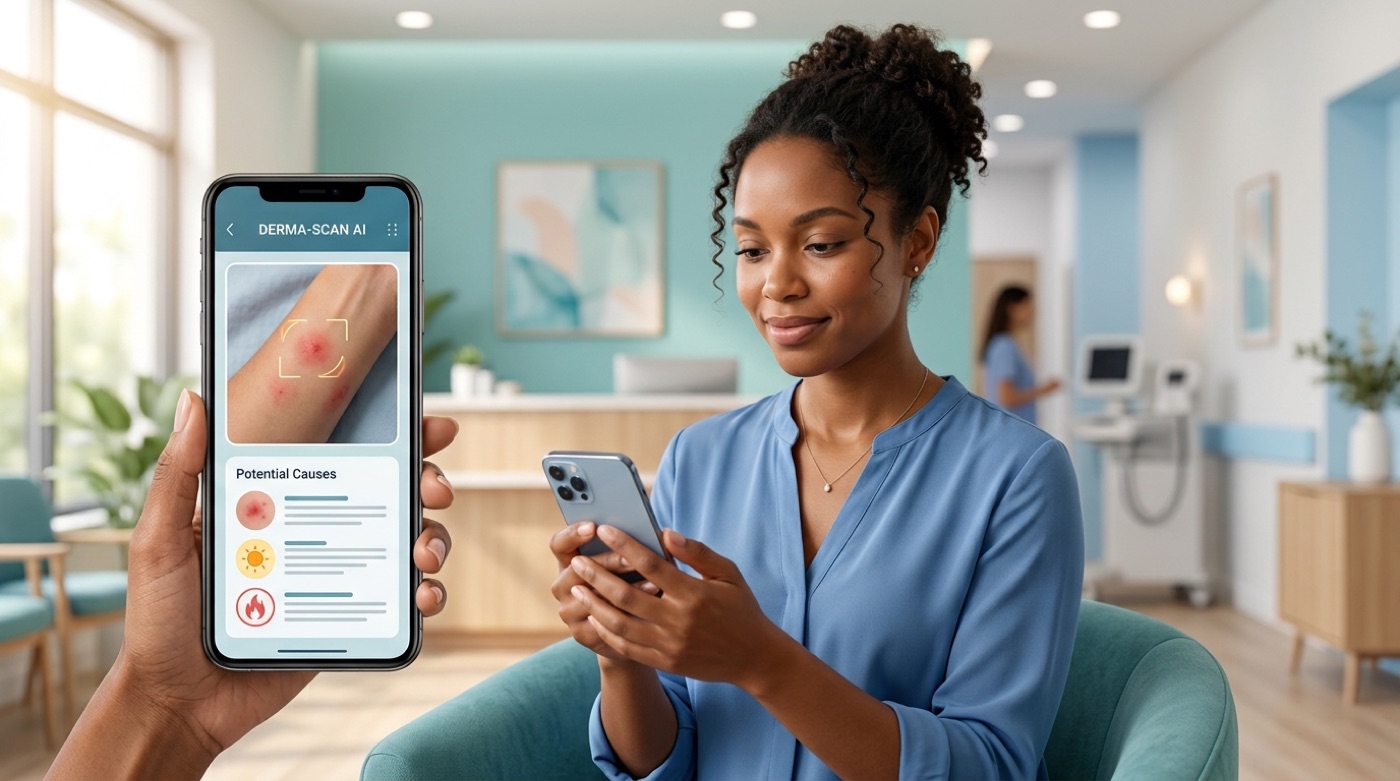
An AI dermatologist looks at a photo of your skin, mole, or rash and, in seconds, suggests what it might be and what to do next. A tool such as the AI dermatologist assistant on this site compares the image against thousands of labeled cases and returns likely conditions plus a triage recommendation, according to a peer-reviewed review of AI use in dermatology. It is a screening and education aid, not a diagnosis.
Used well, it helps you decide whether a spot is worth a dermatologist’s time. It does not replace an in-person exam, and it is never a substitute for medical advice — anything changing, bleeding, growing, or painful needs evaluation by a licensed clinician.
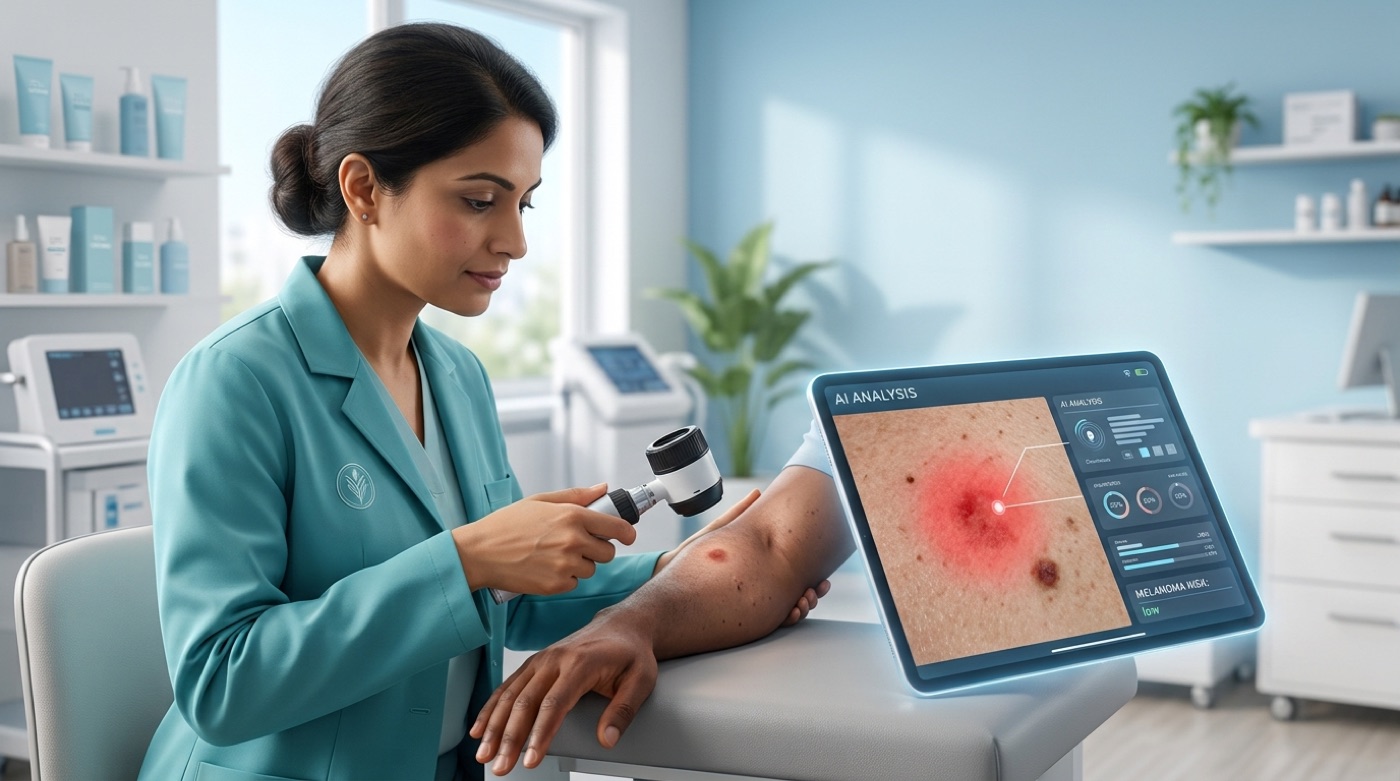
What is an AI dermatologist?
An AI tool that reads a skin photo, not a doctor
An AI dermatologist — also called an AI skin scanner, AI skin checker, or AI mole checker — is software that analyzes an uploaded photo of skin, hair, or nails and returns the most likely conditions along with next-step guidance. Consumer tools on the market today typically screen anywhere from 60 to over 80 distinct skin conditions, covering the large majority of everyday complaints people search for, and some have logged several million skin checks across over a million users combined. Functionally, it works as a triage aid: it suggests possibilities, it does not diagnose.
What it is not
An AI skin scanner is not a licensed physician and not a diagnostic device in the clinical sense. It cannot feel or palpate a lesion, take a medical history, or order a biopsy — it only reads the surface of a photo. Every reputable AI dermatology assistant repeats the same line for a reason: this is not a diagnosis, and it does not replace a board-certified dermatologist.
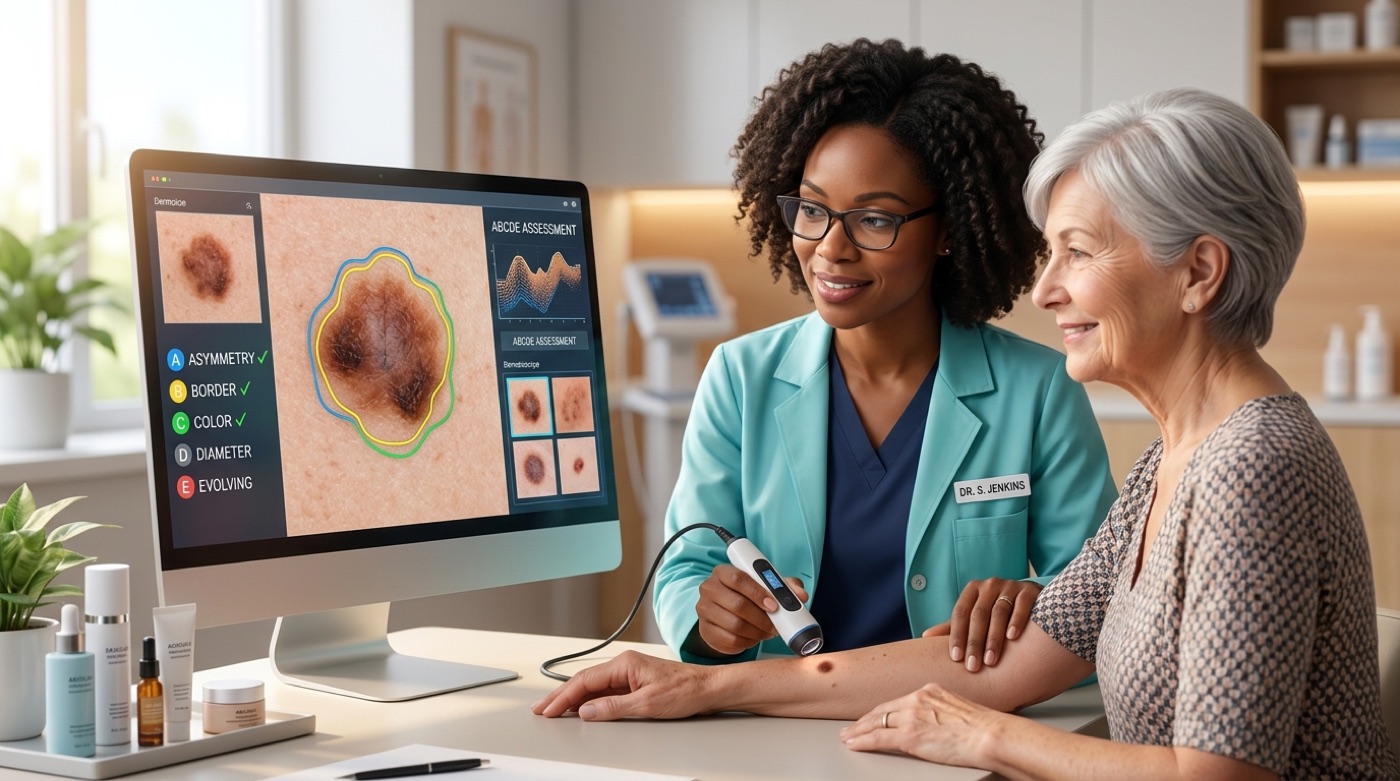
How an AI dermatologist works
From photo to possible conditions in seconds
Under the hood, an AI skin scanner runs a pipeline: an image-quality check, lesion localization (often a YOLO-style object detector that finds the spot in the frame), multi-class classification against dozens of condition categories using convolutional neural networks (CNNs) and vision transformers, and finally a triage mapping to an action — self-care, pharmacy, GP visit, or specialist referral. Results typically come back within about 30 seconds.
Photo quality drives accuracy more than any other single factor. A short routine helps the model do its job:
- Clean the camera lens and use even, natural light — avoid harsh shadows or flash glare.
- Fill the frame with the lesion or rash, shooting from about 10–15 cm away.
- Include a coin or ruler in one shot for scale, if the tool supports it.
- Take two or three angles, including one wide shot showing surrounding skin.
- Keep the file size in the accepted range, typically 300 KB–2 MB, and upload the sharpest shot first.
- Read the result alongside the confidence score, not as a standalone verdict.
- If anything looks urgent, book a dermatologist rather than repeating the scan.
Trained on labeled skin-image datasets
These models learn from large labeled image sets such as ISIC and HAM10000, plus dermatologist-verified case libraries. Coverage still skews toward the conditions and skin tones best represented in the training data — a known and documented limitation — though newer tools are testing more deliberately across Fitzpatrick skin types I–VI to close that gap.
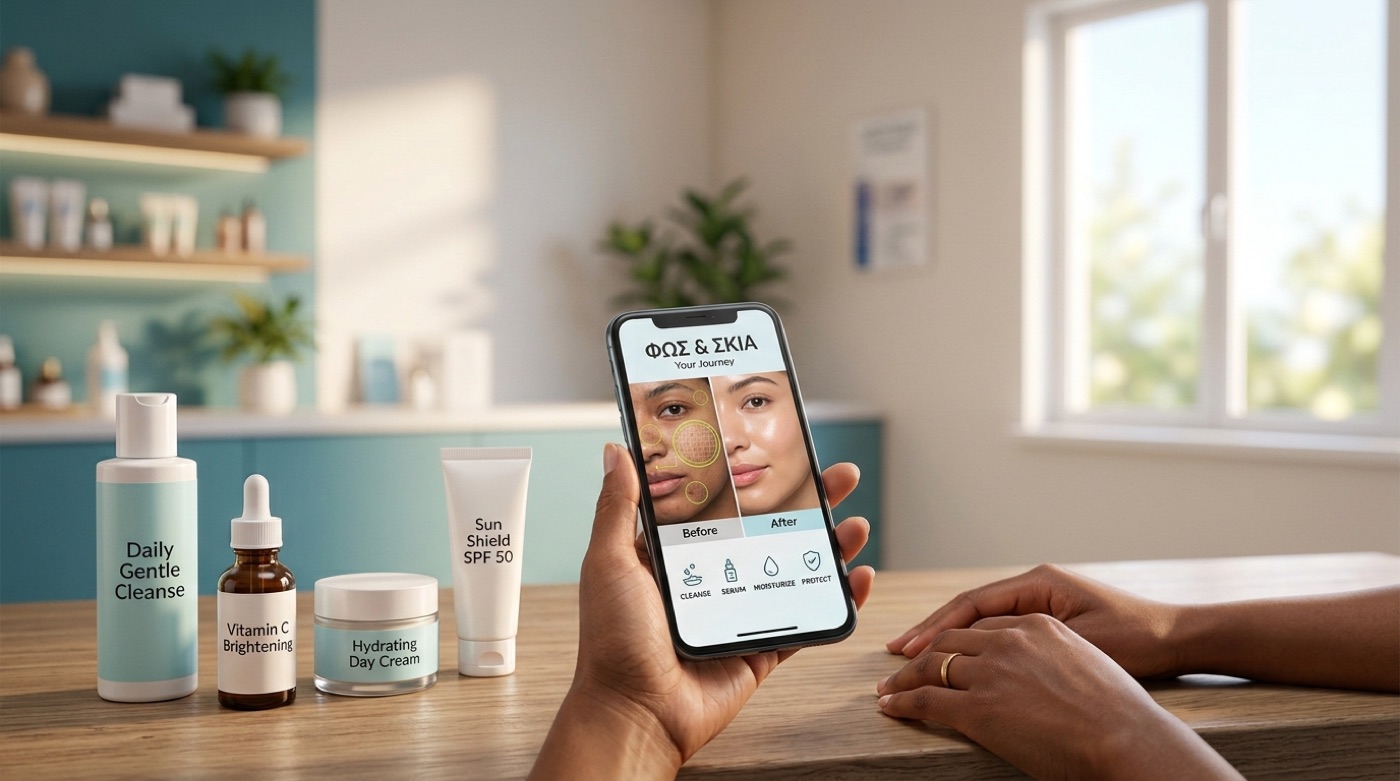
What skin conditions can an AI dermatologist check?
Screens everyday skin complaints. AI skin analysis is strongest on high-frequency issues people are unsure whether to bring to a doctor at all, including:
- Acne, rosacea, and contact dermatitis
- Eczema and psoriasis
- Fungal infections, warts, and cold sores
- Hives and other short-lived rashes
- Benign moles and skin tags
Flags possible skin cancer. Tools also screen for possible melanoma, basal cell carcinoma, and squamous cell carcinoma, and many offer mole checks or full-body mole mapping to track changes over time. A flag is not a confirmation — a suspicious result means “get this looked at,” and confirming it still requires a dermatologist and often a biopsy.
Supports mole mapping over time. Some AI dermatology assistants let you photograph the same mole every few months and compare images side by side, which makes it easier to notice slow changes in size, color, or shape that are easy to miss day to day.
How accurate is an AI dermatologist?
What the research actually shows
In a systematic review and meta-analysis of AI-assisted skin diagnosis, AI outperformed dermatologists in 18 studies, was non-inferior in 12, and was less accurate in 4. For melanoma specifically, the pooled results reached a sensitivity of 0.86 and specificity of 0.88, with an AUC of 0.922, according to the meta-analysis. Landmark studies point the same direction: a Stanford CNN trained on 129,450 images matched board-certified dermatologists on classification tasks, and Fujisawa et al. reported 92.4% accuracy versus 85.3% for board-certified dermatologists and 74.4% for dermatology trainees reading the same images, as summarized in a broader review of AI in dermatology.
Why the numbers deserve caution
The same meta-analysis found that 25 of 38 included studies were at high risk of bias, that datasets over-represented cancer cases relative to real clinical settings, and — the detail that matters most for everyday use — that in real-world primary care, AI showed no significant advantage over routine practice. High accuracy in a controlled lab test does not guarantee the same result on a photo taken on your bathroom counter. Treat an AI dermatology assistant as a well-read second opinion, not a verdict, and use any result as a reason to book or skip an appointment — never as a stand-in for one.
| Study / Source | Comparison | Reported result |
|---|---|---|
| Meta-analysis (pooled melanoma) | AI vs. dermatologists | 0.86 sensitivity, 0.88 specificity, AUC 0.922 |
| Stanford CNN | 129,450 training images | Matched board-certified dermatologists |
| Fujisawa et al. | AI vs. dermatologists / trainees | 92.4% vs. 85.3% / 74.4% accuracy |
| Brinker et al. | AI vs. dermatologists | 82.3% vs. 67.2% sensitivity |
| Real-world primary care | AI vs. routine practice | No significant advantage found |
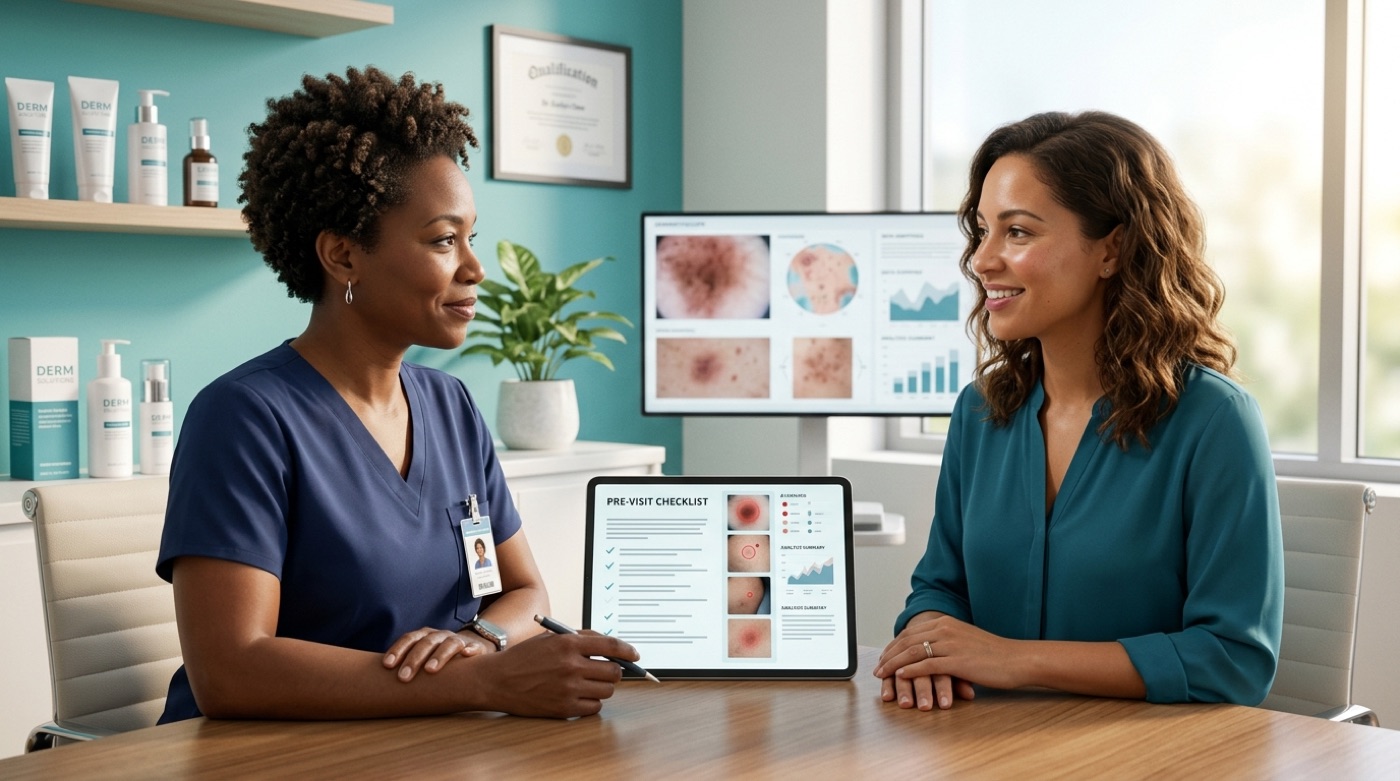
AI dermatologist vs an in-person dermatologist
Cost, speed, and access
An AI skin check is free or costs a few dollars and is available 24/7 from a phone. A US in-person dermatology visit typically runs $100–$300 or more and can take weeks to schedule, especially outside major cities. For a quick “should I worry about this?” question, AI wins on speed and cost — that gap is exactly why triage tools exist.
What only a real dermatologist can do
A dermatologist can do several things no AI dermatologist ever will:
- Palpate the lesion to feel its texture and depth
- Examine it under dermoscopy for structures invisible to a phone camera
- Take a full medical and family history
- Order and interpret a biopsy
- Prescribe topical or systemic treatment
The two approaches complement rather than compete with each other, as this comparison makes clear:
| Factor | AI dermatologist | In-person dermatologist |
|---|---|---|
| Cost | Free to ~$25 per check | $100–$300+ per visit |
| Availability | 24/7, instant | Days to weeks for an appointment |
| Physical exam | Not possible | Palpation, dermoscopy |
| Biopsy / lab tests | Not possible | Can order and interpret |
| Prescriptions | Not possible | Can prescribe treatment |
| Best use | First-look triage | Diagnosis and treatment |
Limitations, privacy, and when to see a doctor now
Reputable AI skin-check tools encrypt uploaded images, minimize data retention, and align with standards such as the GDPR and ISO 27001 information-security certification; several are also CE-marked or registered as UKCA Class I medical software. That said, a few habits keep your data safer:
- Avoid uploading photos that show your face or other identifying features alongside the lesion.
- Read the privacy policy before sharing images, especially where data is stored and for how long.
- Check whether the provider is CE-marked, UKCA-registered, or ISO 27001-certified before trusting it with sensitive photos.
- Delete your scan history periodically if the app allows it.
No AI tool, however accurate on paper, should be the last word on a changing mole. The American Academy of Dermatology has long promoted a simple screening rule for exactly this reason:
Look for the ABCDEs of melanoma — Asymmetry, Border irregularity, Color variation, a Diameter larger than 6 millimeters, and Evolving size, shape, or color.
American Academy of Dermatology
Red flags that mean see a doctor promptly
Don’t wait on an AI result for warning signs. See a board-certified dermatologist promptly if you notice any of the following:
- A mole that fits the ABCDE rule: Asymmetry, irregular Border, uneven Color, Diameter over 6 mm, or Evolving shape and size.
- A sore or lesion that hasn’t healed within 4–6 weeks.
- Anything bleeding, rapidly growing, itching persistently, or painful without an obvious cause.
- New moles appearing quickly in adulthood, especially after age 40.
When it’s an emergency, not a screening question
Some skin symptoms are not a job for any AI tool, free or paid. Call 911 or go to the nearest emergency room if a rash is spreading rapidly and comes with fever, or if you have facial or throat swelling, hives with difficulty breathing, or signs of a severe allergic reaction. Those situations need immediate emergency care, not a photo upload. For more measured cases, guidance from the Skin Cancer Foundation on warning signs is a reliable starting point. When in doubt, an AI skin checker can help you frame the right questions for your appointment, but a licensed clinician always makes the call — this article is educational information, not medical advice, and does not diagnose or treat any condition.
Frequently Asked Questions
- Can AI diagnose skin conditions?
No. AI can suggest likely conditions and triage urgency, but it does not diagnose. A diagnosis requires a licensed dermatologist and sometimes a biopsy.
- Is there a free AI dermatologist?
Yes — several tools, including the assistant on this site, offer a free skin check with optional paid features. Free tools are fine for a first look; they don’t replace medical care.
- How accurate is AI at detecting skin cancer?
For melanoma, pooled research shows about 0.86 sensitivity and 0.88 specificity, but accuracy varies with photo quality and skin tone and is lower in real-world use. A flag means ‘get it checked,’ not ‘it’s cancer.’
- Can AI check moles?
Yes. AI mole checkers and mole-mapping tools compare a mole against known patterns and track changes over time — but any mole that is changing or matches the ABCDE rule should be seen by a dermatologist.
- Can an AI dermatologist replace a real dermatologist?
No. It’s a screening and education aid available anytime. It cannot examine, palpate, biopsy, or treat, so it complements — never replaces — a board-certified dermatologist.
- Is AI skin analysis safe and private?
Reputable services encrypt photos and follow standards like GDPR and ISO 27001. Read the privacy policy, avoid sharing identifying details, and remember AI answers can be wrong.